
Blog
What a CNC Cobot Cell Actually Needs
ArmMate
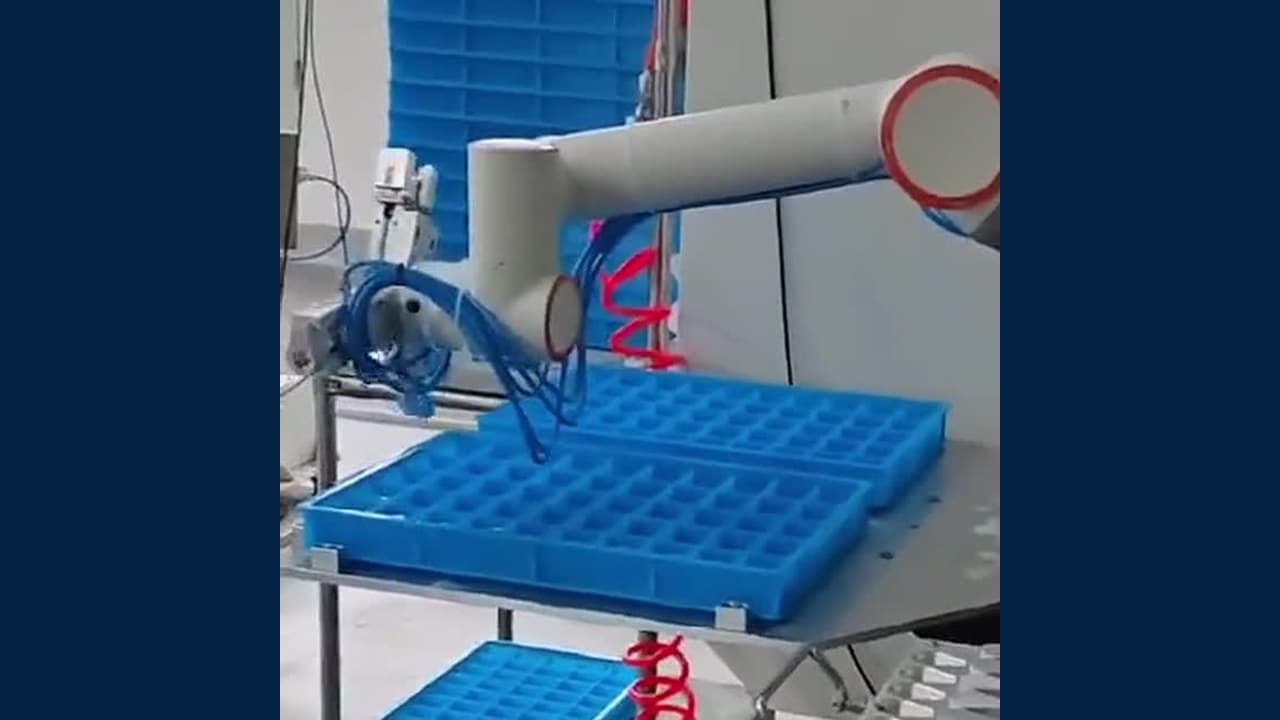
A CNC cobot cell is not "a robot next to a machine." The arm is the part people photograph. The cell is the mount, the gripper, the place parts sit, the signals from the control, the safety zone, and the person who can restart it on a Monday. Leave one of those out and the spindle still waits.
ArmMate builds that list around the machine you already run. An example cycle on this site shows unload, then load, on a lathe. This page is what else has to exist before that motion is a process.
The machine you already own
The cell starts with the CNC, not with a catalog. We need the real envelope: door type, door swing, chuck or vise height, and whatever else lives in the reach. A bar feeder, a tool setter, a coolant line, and the control pendant all count. If a person cannot stand where they stand today once the pedestal is in, the layout is wrong even if the arm can touch the part.
Mills and lathes are the common first machines. On a mill the repeated work is door open, load, close, start, unload. On a lathe it is chuck load and unload between cycles. Secondary work, such as deburr, wash, or gauge, belongs in the cell only when it is repetitive enough to program. A one-off inspection habit is not a station.
The control has to tell the truth
The arm needs to know that the cycle is finished, that the door state is what the program thinks it is, and that the chuck or the vise is clamped before the spindle starts. Those are ordinary machine signals. If they are not available, the integration may need work on the control, or the honest answer may be that this machine is a poor first cell. Guessing from a timer is not a handshake.
Mount, reach, and a path that clears the door
Someone has to choose where the arm stands. A pedestal is common. The right mount is the one that reaches the chuck or the vise with the door open and still parks clear of people and of the door itself. Reach on a product page is a radius in free air. Your machine is not free air.
Bring the heaviest part and the gripper you expect to use. Both count against payload. Which Fairino, Duco, or Dobot model can carry that sum out to that pose is a separate question, answered from the maker pages in the comparison article and then checked on site. This page does not add specifications those pages do not publish.
Gripper and part presentation
The arm does not pick "a part." It picks a part that is presented the same way every time, at a grip the fingers can repeat.
Fingers for one family
Define the family first. Parts that share an outside diameter, a flange, or another stable feature can share fingers. Parts that only share a material probably cannot. Custom fingers are normal. They are also the item most likely to be forgotten in a budget that only lists the arm.
A place for raw parts and a place for finished parts
Trays, a small rack, or a fixture plate give the arm a known position. Your trays have to match your blank. A deep bin of mixed remnants is usually the wrong first infeed. If a person has to untangle the next blank, you have not removed the reach. You have moved it.
Finished parts need a home that does not dump them into each other if the face matters. Chips and coolant on the grip surface belong in the trial, not in the punch list after handover.
A program that survives the next job
The first program should follow the job you actually run, including the changeover you actually do. If every new part number needs the integrator back on site, the cell is too brittle for a small shop. A lead operator should be able to restart a known job, clear a simple stop, and tell the difference between a grip fault and a machine fault.
That is training, not a PDF in a drawer. It is also why we ask, during assessment, who that operator will be. Cobot machine tending for small CNC shops is the shorter version of how to pick that first job.
Safety, with people still in the aisle
A collaborative arm can share space with people. It does not cancel a risk assessment. Each ArmMate CNC cell ships with a station risk assessment per ANSI/RIA R15.06 and ISO 10218, collaborative-operation validation per ISO/TS 15066 where that applies, documented e-stop and lockout/tagout steps, and operator training. You still own daily lockout on your floor.
The practical test is simple. Can a person load a tool, check a dimension, and walk past the cell without climbing over a layout that only works in a rendering? If the answer is no, the cell is not done.
Acceptance, then support
Design comes before install. The published path on how a project runs is assess, design, install and program, then support. The time ranges there are typical ranges, about 1 to 2 weeks, 2 to 4 weeks, and 1 to 3 weeks on site. They are not a promise that your machine will match the short end.
Handover includes a site acceptance test against the cycle in the proposal. The cell is not "in" because the arm moves. It is in when it runs the agreed cycle on your parts, and your operator can restart it.
Support after that is the service plan attached to the arm, the same idea as on a frying cell: someone who knows the cell, on a schedule, instead of a stranger meeting the machine for the first time during a breakdown. Plan names and response targets live on the plans page. This article does not restate those prices.
What this does not include
A CNC cell is quoted after a free site assessment. There is no published CNC package price. The only published ArmMate system price is for frying cobot systems, from $19,000 plus installation. You buy and own the robot. Do not treat the frying figure as a lathe quote.
We also do not publish cycle-time gains, scrap cuts, or payback months for a shop we have not measured. Anyone who gives you those numbers before the walkthrough is guessing. Many buyers ask about Section 179. Talk to your tax advisor. This is not tax advice.
A checklist you can take to the machine
- Door type, swing, and what else occupies the reach.
- Heaviest part, plus the gripper you expect to carry.
- A repeatable grip, and a tray or rack for raw and finished parts.
- Real signals for cycle complete, door, and clamp.
- A named operator who can restart the cell.
- Room for people to keep using the aisle.
Bring that list to Irvine, or send it ahead of a visit. Email hello@armmate.com, call (949) 333-3800, or use the assessment form. The address is 15642 Sand Canyon, Irvine, CA 92618. If the list shows the cell does not fit, that is a successful assessment.