
Blog
Top 5 Reasons Every CNC Shop Should Add a Cobot
ArmMate
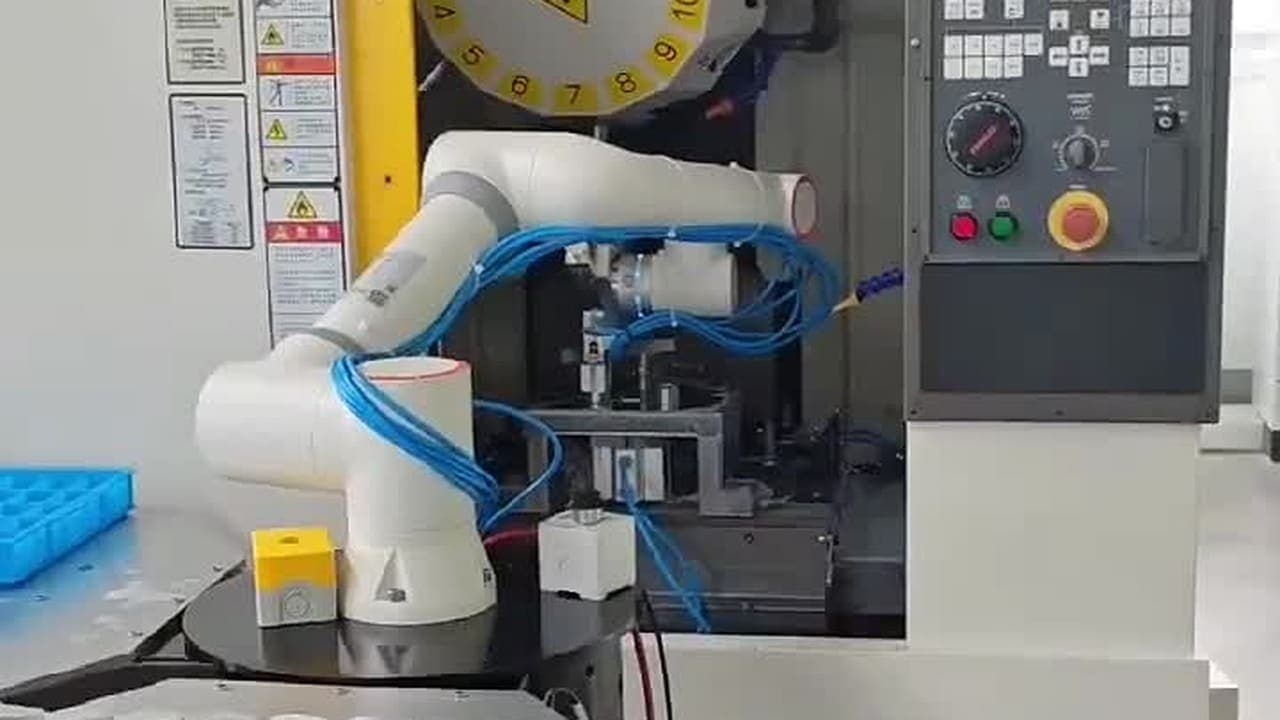
If your CNC spindles sit idle waiting for the next blank, you already know the bottleneck. It is rarely the machine. It is the load and unload cycle that keeps a skilled operator glued to one door for an entire shift.
Collaborative robots (cobots) were built for exactly that job: tending machines next to people, without a full hard-guarded cell for every application. Here are five reasons CNC shops keep adding them, with industry sources behind each point, and how we approach machine tending at ArmMate.
1. More parts per shift without adding another hired hand
Machine-tending cobots keep the spindle fed while your team handles setups, inspection, and the jobs that need judgment. In a CTE Magazine case study on high-mix, low-volume tending, BS CNC raised output from 128 to 155 parts per shift (about 21% more) and reported a large cut in downtime after automating load and unload with a cobot and flexible grippers.
Source: Automating High-Mix, Low-Volume Machine Tending (CTE Magazine)
For shops that sell spindle time, that kind of lift is the difference between quoting more work and turning it away.
2. Lights-out and second-shift hours you cannot staff today
Skilled operators are hard to hire for nights and weekends. Cobots do not replace that craft. They cover the repetitive open-door, load, close-door loop so the machine can keep cutting when the floor is quiet.
The International Federation of Robotics highlights fabricator Raymath, which used cobot machine-tending cells to get 24 hours of machining where that had not been possible before, with a reported machining productivity jump well into hundreds of percent when lights-out hours were added.
Source: IFR case study: cobots on welding and machine tending
If your quote load is strong but your third shift is empty, this is usually the first place a cobot pays for itself.
3. Consistency that shows up in scrap and quality
People get tired. Cobots repeat the same approach, grip, and place for hours. ASSEMBLY magazine covered Donk Industries, where a Universal Robots cobot tending a CNC roughly doubled that machine's productivity and cut the failure rate in half, with operators noting smoother, more consistent quality.
Source: Cobot Automates Machine Tending (ASSEMBLY)
Fewer mishandled blanks and fewer "almost seated" parts means less scrap and less time chasing issues at inspection.
4. Your best people stay on work that keeps them
Repetitive machine tending is a common reason good machinists burn out or leave. When a cobot takes the door cycle, those same people move into quality, programming, fixtures, and customer work.
Control Engineering, summarizing industrial cobot applications, points to higher throughput on CNC load and unload cells, fewer repetitive-motion injuries, and typical ROI windows often cited in the 18 to 24 month range depending on the cell (always run your own numbers).
Source: Add productivity, see examples to dispel three collaborative robot myths (Control Engineering)
Retention is a capacity strategy. Automating the dull cycle protects the skill you already paid to build.
5. Retrofit the machines you already own
You do not have to rip out a good CNC to automate it. A cobot cell can tend the lathe or mill you run today: open the door, load from a tray or vise, close, wait for cycle complete, unload, repeat. Changeovers stay programmable. When the job mix shifts, you re-teach instead of buying a single-purpose hard-automation line.
That retrofit mindset is how we work at ArmMate. We integrate collaborative robots for CNC machine tending (and for commercial kitchen fry stations) so shops keep the equipment they already trust and own the robot that tends it. Site assessment first, then install and support from Irvine, California.
Learn more or book a walkthrough: armmate.com
Email: hello@armmate.com
Phone: (949) 333-3800
HQ: 15642 Sand Canyon, Irvine, CA 92618
What to do next
- Pick the CNC that sits idle the most between cycles.
- Note part size, grip points, door style, and how blanks are staged today.
- Ask for a site assessment before anyone talks quote. A good integrator will tell you if the cell is a fit, and when it is not.
If you want a second set of eyes on a machine-tending cell in Southern California, start here: https://armmate.com
Sources
- CTE Magazine: Automating High-Mix, Low-Volume Machine Tending
- ASSEMBLY: Cobot Automates Machine Tending
- International Federation of Robotics: Cobots boost production on welding and machine tending
- Control Engineering: Collaborative robot productivity myths